Key takeaways
- You learn a complete meal rather than a single dish. A Sri Lankan class builds five to ten small curries, sambols and a starch that are eaten together.
- The techniques are hand techniques: tempering whole spices, pounding in a mortar, pressing coconut milk in two strengths, scraping fresh coconut, slapping out roti.
- You learn ingredients as much as recipes. Goraka, pandan, curry leaves, Maldive fish and real Ceylon cinnamon are the ones that change how you cook afterwards.
- The hardest thing taught is sequencing, getting six pots to finish together. That is the actual skill of the cuisine.
- Expect three to four hours, no written recipes in a village class, and a meal at the household’s table at the end.
The shape of a class
A village class runs three to four hours and moves in roughly four stages.
The market, if you booked the morning session. An hour, usually starting around seven. You walk through with your host while they buy, and the lesson is what to look for rather than what to make. Which vegetables are in season, how to tell a fresh fish from a tired one, what things should cost.
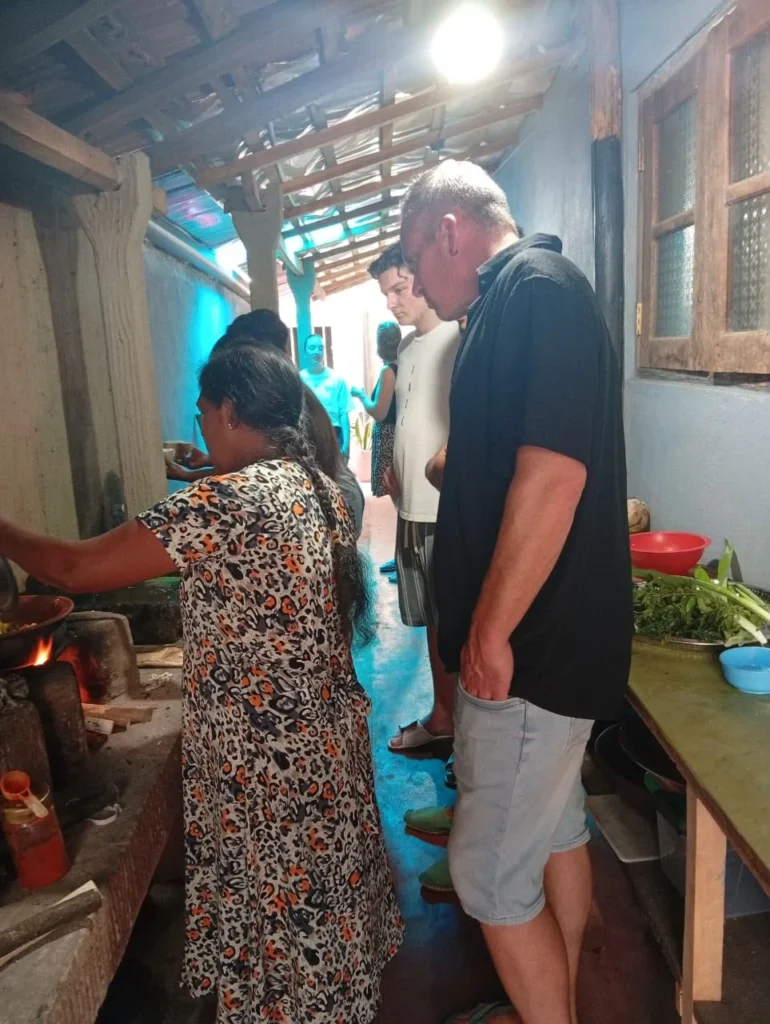
Prep. The longest stretch and where most of the teaching happens. Coconut gets scraped, spices get pounded, vegetables get cut, and your host explains what goes where while everyone works.
Cooking. Faster than you expect. Most Sri Lankan curries take fifteen to twenty-five minutes. The pots go on in a deliberate order so everything finishes together.
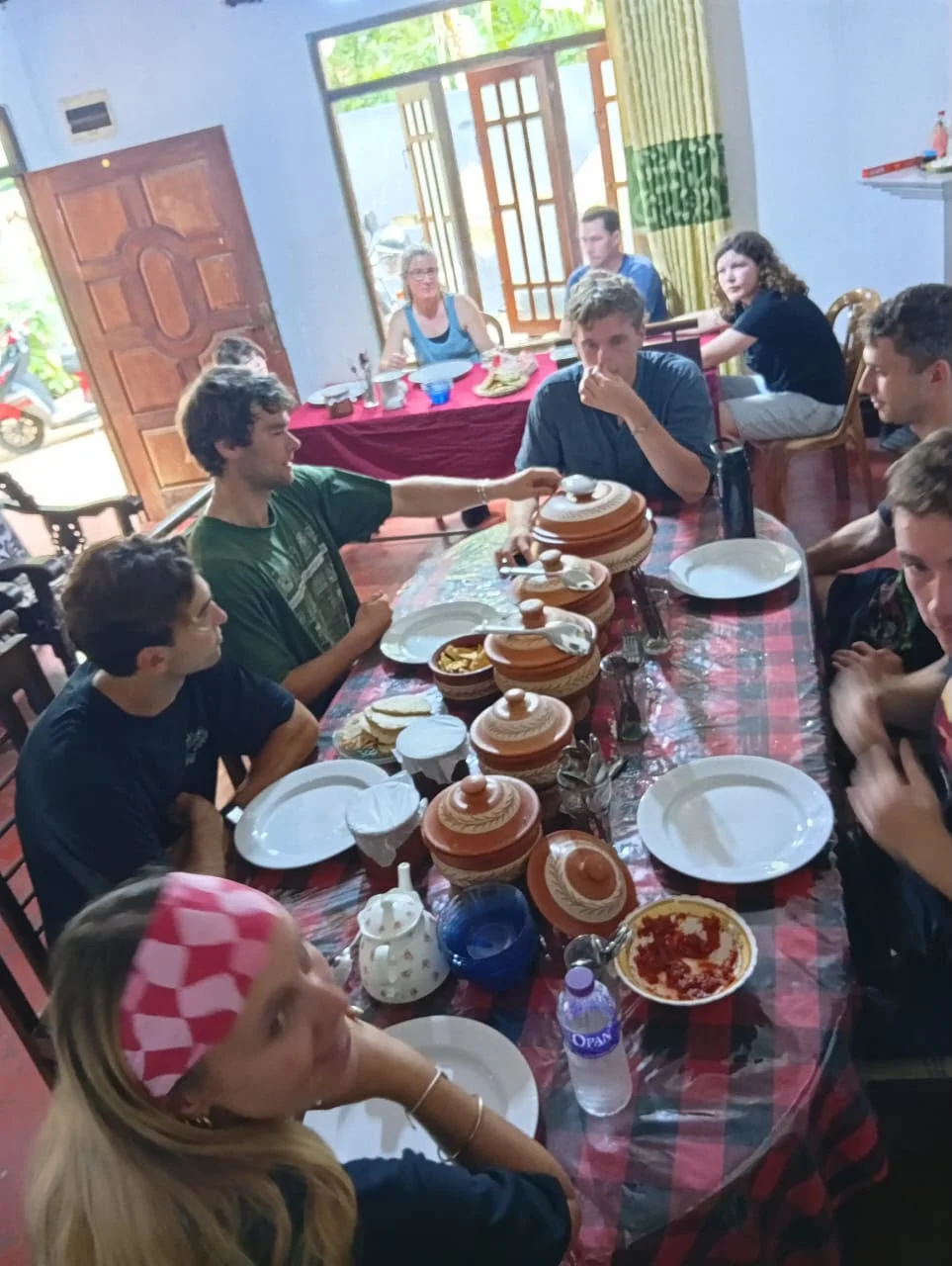
Eating. At the household’s table, with the household. This is not a formality tacked on the end. Tasting your version next to theirs is how you find out what you got wrong.
The techniques you will actually learn
Tempering
Whole spices into hot oil or coconut oil until they pop and release. Mustard seed, curry leaves, pandan, cinnamon bark, sometimes fenugreek. Thirty seconds, and it is the base of most of the menu.
This is the single most transferable thing you will take home, because it works underneath almost any vegetable you have.
Coconut milk in two strengths
Not a carton. Fresh grated coconut is squeezed once to give a thick first press, then soaked and squeezed again for a thinner second press. The thin milk cooks the dish. The thick milk goes in at the very end, off the heat, so it does not split.
Understanding that one distinction fixes most of what goes wrong when people cook coconut milk curries at home.
Pounding rather than blending
Sambols and spice pastes are made in a mortar or on a grinding stone. The texture is completely different from a blender, which turns pol sambol into a wet paste instead of a loose, fluffy mixture. You will feel the difference immediately.
Scraping fresh coconut
A stool with a serrated blade. You will be bad at it. Everyone is bad at it. It is also the reason the food tastes the way it does, and once you have done it you understand why desiccated supermarket coconut is a different ingredient rather than a substitute.
Roasting curry powder
Sri Lankan black curry powder is toasted until nearly dark. That roasting is what separates it from the yellow powder sold as curry powder elsewhere, and you will smell the moment it is ready.
Working dough by hand
Pol roti, coconut flatbread, is mixed, divided and slapped out between your palms rather than rolled. Your first one will tear. Roti is forgiving and you get several attempts.
Sequencing
The real lesson. Rice on first because it takes longest. Dhal next because it holds. The vegetable curries in the middle. Sambol last because it is fresh and should not sit. Nobody says this out loud as a rule, but you watch it happen and it becomes obvious.
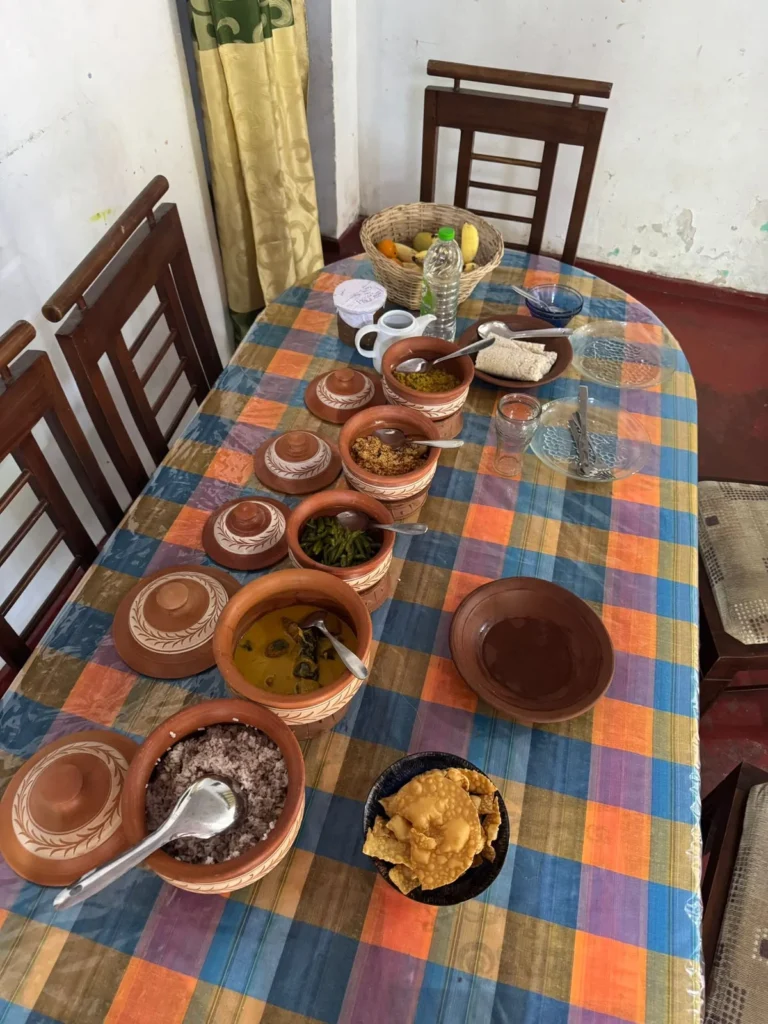
The dishes you will cook
The menu shifts with the garden and the season, but a typical class produces most of this.
Parippu, red lentil dhal in coconut milk with turmeric, curry leaves and pandan. The backbone of the meal.
Pol sambol, fresh coconut pounded with chilli, lime, red onion and a little Maldive fish. The sambol everyone tries to recreate at home.
A garden vegetable curry, whatever is producing. Green beans, pumpkin, beetroot, ash plantain, or jackfruit if the tree is heavy.
A white curry, mild and coconut-heavy with turmeric and fenugreek, to balance the hotter dishes.
Pol roti, coconut flatbread.
Red rice, which takes longer than white and tastes better.
Papadam and a fried something for texture.
Fish or chicken if the household eats it, often in the dark roasted blend that gives Sri Lankan black curry its colour. Seafood classes on the Galle coast build the plate around the catch instead, which we covered in the Galle seafood class piece.
If you want the full anatomy of how the plate fits together, we wrote that up separately in rice and curry: how the plate is actually built.
The ingredients you will learn to recognise
This is the part that changes how you shop afterwards, and it gets less attention than the recipes.
Goraka. A dried, smoked fruit used for sourness, sharper than tamarind. It is what makes a sour fish curry dark and keeps it edible for days without refrigeration.
Pandan. A long green leaf knotted and dropped into the pot. Grassy, faintly nutty, and almost impossible to describe until you smell it cooking.
Curry leaves. Not related to curry powder. Fried in the tempering and left in.
Maldive fish. Dried, cured tuna, shaved into sambols for savoury depth. Left out entirely in vegan versions.
Ceylon cinnamon. A different species from the cassia sold as cinnamon in most Western supermarkets. Paler, softer, sweeter, and it crumbles under your thumb. Mild enough to be left whole in a pot and eaten around.
Buy all of these before you fly home. They keep, they cost a fraction of what they cost elsewhere, and without them the dishes do not taste right.
What you will not learn
Worth saying, so the expectation is right.
You will not get written recipes in a village class. Nobody hands out anything laminated. Some hosts will email a rough list afterwards if you ask, and many will not.
You will not learn hoppers or string hoppers in a standard class. Appam needs a fermented batter started the night before and a specific pan, and string hoppers need a press. Both are breakfast foods and usually taught, if at all, in a dedicated session.
You will not learn to time six pots yourself. You will watch it done and understand the order. Doing it unaided takes practice at home.
And you will not master the coconut stool. Nobody does in an afternoon.
Frequently asked questions
What will I learn in a Sri Lankan cooking class?
A complete rice and curry meal of five to ten dishes, plus the core techniques behind it: tempering whole spices, pressing coconut milk in two strengths, pounding sambols in a mortar, scraping fresh coconut, hand-shaping roti, and sequencing several curries to finish together.
How many dishes do you cook in a Sri Lankan cooking class?
Usually six to ten. A Sri Lankan meal is many small dishes eaten together rather than one main course, so the class builds the whole plate.
Do you get written recipes?
Rarely in a village class. The teaching is verbal and demonstrated while you cook. Photograph the ingredients rather than trying to take notes.
Will I learn to make hoppers?
Not usually. Hoppers need a batter fermented overnight and a special pan, so they are taught in dedicated sessions rather than a standard class.
What equipment do they use?
Clay pots over a wood fire, a mortar and pestle or grinding stone, a coconut scraper stool, and a flat pan for roti. Almost none of it is needed to cook the same food at home.
Can I really cook this again at home?
Yes. Dhal, a vegetable curry and a coconut sambol are all reproducible with a pan and a mortar. Sourcing fresh or frozen grated coconut is the main obstacle.
How long does a Sri Lankan cooking class take?
Three to four hours including the meal. Morning classes that start at a market add about an hour.
Do you eat what you cook?
Yes, at the household’s table with the family. In a village class that shared meal is part of the lesson rather than an add-on.